
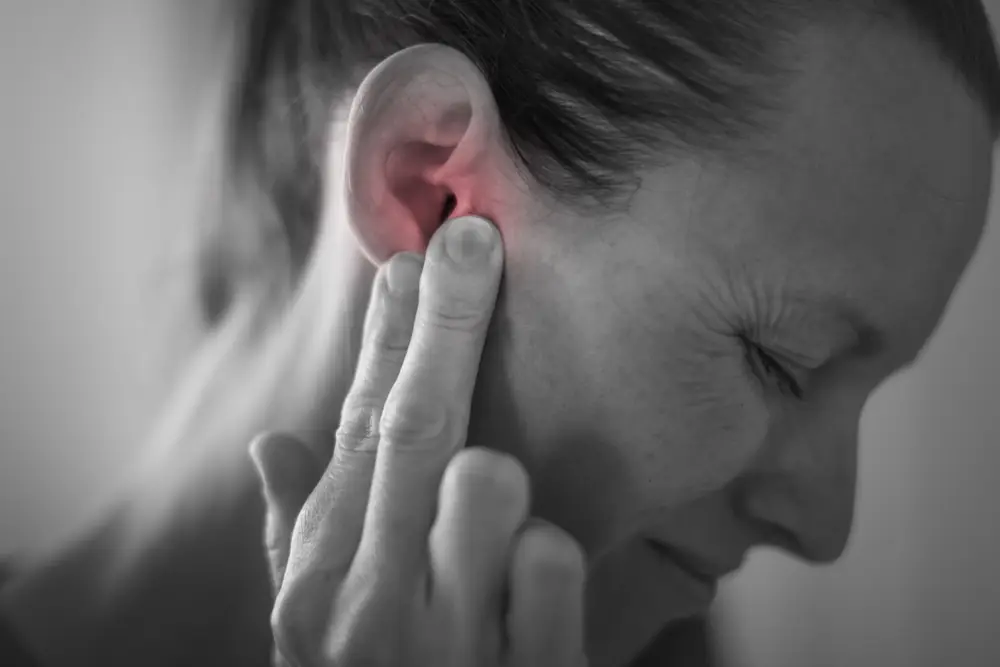
Yes, adults can get ear infections, and when they do, the discomfort is hard to ignore. Although ear infections are more common in children, adults still experience them from time to time, especially when illness, allergies, sinus pressure, or irritation affects the ears. Because many adults assume ear pain will go away on its own, they may wait too long to seek care and end up feeling worse for longer.
What are the symptoms of an adult ear infection?
Adult ear infections cause a range of symptoms depending on where the infection is located. Some symptoms are obvious, while others may seem vague or easy to blame on something else. Here are six of the most common symptoms adults should watch for.
- Ear pain or pressure
- Hearing changes
- Drainage from the ear
- Fever
- Dizziness or balance problems
- Tenderness around the ear
1. Ear pain or pressure
One of the most common signs is pain inside or around the ear. The pain may be sharp, dull, throbbing, or constant, and some people also describe a feeling of fullness or pressure. In some cases, the discomfort gets worse when lying down or chewing.
2. Hearing changes
An ear infection can temporarily affect hearing, making sounds seem muffled or distant. This happens because fluid or swelling interferes with sound moving through the ear. Many adults notice this symptom before they realize they have an infection.
3. Drainage from the ear
Fluid draining from the ear can be a sign of infection, especially if it is yellow, cloudy, or bloody. Drainage may occur when the eardrum is irritated or when an outer ear infection is present. Any unusual discharge should be checked by a clinician.
4. Fever
Some adult ear infections cause a low-grade fever, especially if the infection is related to a respiratory illness. Fever is the body’s response to infection and inflammation. While not everyone will have one, its presence can suggest that an infection is active.
5. Dizziness or balance problems
The ears play a role in balance, so infections can sometimes lead to dizziness, unsteadiness, or a spinning sensation. This symptom may be mild or significant depending on the severity of inflammation. Balance changes should never be ignored if they are new or worsening.
6. Tenderness around the ear
Outer ear infections may cause the ear itself or the area around it to feel sore when touched. Some people also notice swelling, redness, or itchiness. If the outer ear is painful to the touch, that can be a helpful clue that the infection is external rather than deep inside the ear.
Why adult ear infection symptoms are sometimes confused with other illnesses
Adult ear infection symptoms often overlap with other common conditions, which is one reason people may not seek testing right away. Ear pain can be confused with sinus pressure, jaw pain, dental problems, or even a sore throat. Hearing changes may be dismissed as congestion or temporary blockage from a cold.
Dizziness is sometimes linked to dehydration, a viral illness, or an inner ear balance issue rather than an infection. Because the symptoms are not always dramatic, adults may try to wait it out instead of getting evaluated. That delay makes recovery slower if the infection needs medical treatment.
Another reason symptoms are overlooked is that adults often expect ear infections to look the same as they do in children. In reality, adult infections may present more subtly, with pressure, mild pain, or intermittent symptoms. A primary care visit determines whether the problem is actually an ear infection or something else entirely.
How do adults get ear infections?
Adults can develop ear infections for several reasons, and understanding the cause can help guide treatment. Some infections start after a cold, while others are related to irritation, water exposure, or underlying inflammation. Here are five of the most common causes.
- Upper respiratory infections
- Sinus congestion or allergies
- Water exposure
- Skin irritation or injury
- Smoking or secondhand smoke exposure
1. Upper respiratory infections
Colds, flu, and other respiratory infections can cause swelling and fluid buildup in the ear. When the Eustachian tube does not drain properly, bacteria or viruses can multiply and trigger infection. This is one of the most common pathways to a middle ear infection.
2. Sinus congestion or allergies
Sinus pressure and allergy-related inflammation can block normal drainage in the ear. When fluid gets trapped, it creates an environment where infection can develop. Adults with seasonal allergies may notice ear symptoms flare during allergy season.
3. Water exposure
Water trapped in the ear after swimming, showering, or sweating can increase the risk of outer ear infection. This is sometimes called swimmer’s ear. Moisture softens the skin in the ear canal and makes it easier for germs to grow.
4. Skin irritation or injury
Scratching the ear, using cotton swabs, or having eczema in the ear canal can irritate the skin and open the door for infection. Even small breaks in the skin can allow bacteria to enter. Protecting the ear canal from trauma is an important prevention step.
5. Smoking or secondhand smoke exposure
Smoking affects the way the ears and sinuses clear fluid, which increases the likelihood of infection. It can also make inflammation worse and slow healing. Adults exposed to smoke may find that ear symptoms last longer or return more often.
What is the treatment for an adult ear infection?
Treatment depends on the type of infection, how severe it is, and whether bacteria are involved. Many ear infections are treated with antibiotics when a bacterial infection is suspected or confirmed. In other cases, a clinician may recommend monitoring, pain relief, or specific ear drops if the outer ear is affected.
There are also practical steps that reduce the length and severity of symptoms while the infection heals. These tips do not replace medical care, but they do support recovery and make symptoms easier to manage.
- Take prescribed medications exactly as directed, even if you start feeling better.
- Use over-the-counter pain relief if recommended by your clinician.
- Keep the ear dry and avoid swimming until symptoms improve.
- Do not put cotton swabs or other objects into the ear.
- Rest and stay hydrated so your body can heal more effectively.
If symptoms are severe, persistent, or accompanied by high fever, significant drainage, or worsening dizziness, a medical evaluation is important. Some ear infections clear on their own, but others require prompt treatment to prevent complications. A primary care clinician can help determine the best next step.
When to seek care
At Kindwell Primary Care, we provide attentive, patient-centered care for common illnesses like ear infections and many other everyday health concerns. If you are dealing with ear pain, pressure, or hearing changes, becoming a member gives you access to top primary care that helps you get answers sooner. We are here to help you feel better, recover faster, and stay on top of your health. Connect with us today.